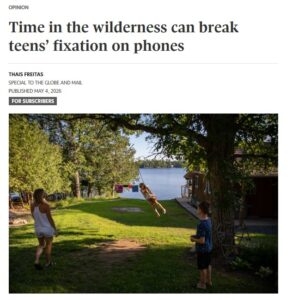
When my oldest son was diagnosed with autism in 2022, I did what most parents do:
I started reading.
I read articles, research papers, social media posts, and books written by professionals, autistic adults, and parents. I wanted to understand my son better, and I wanted to help other people understand him too.
What surprised me was how difficult it was to find a children’s picture book about autism that explained it in a simple, positive, and relatable way.
I wasn’t looking for a book that treated autism like something to overcome, and I didn’t want a long explanation filled with medical language. I wanted a story that a four-year-old could understand, one that celebrated autistic children while helping their classmates, siblings, friends, and family understand how their minds work.
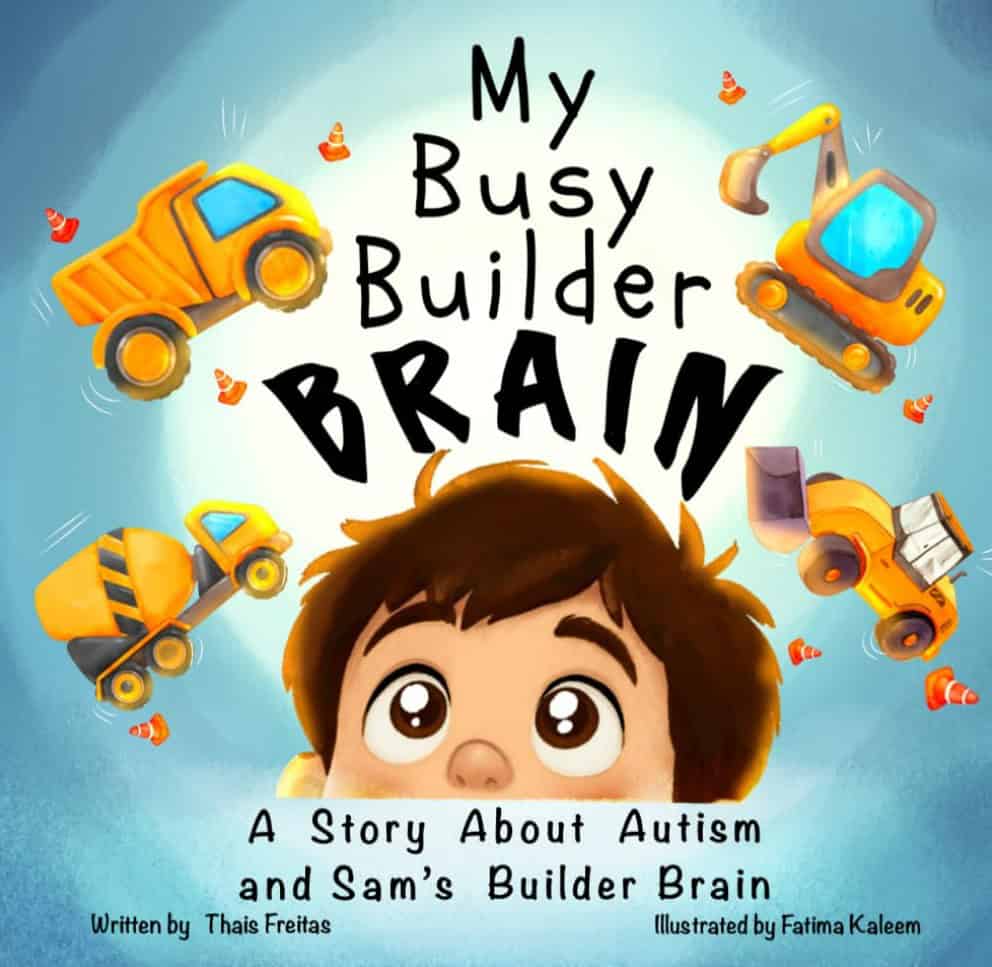
So I decided to write the book I couldn’t find: My Busy Builder Brain
Introducing My Busy Builder Brain
My Busy Builder Brain is a children’s picture book about autism inspired by my son. The main character, Sam, is based on him.
Like many children with autism, my son has always loved construction vehicles. Excavators, bulldozers, cranes, dump trucks… if it has wheels and moves dirt, he probably knows more about it than you and I together do.
Watching him play gave me the idea for the book.
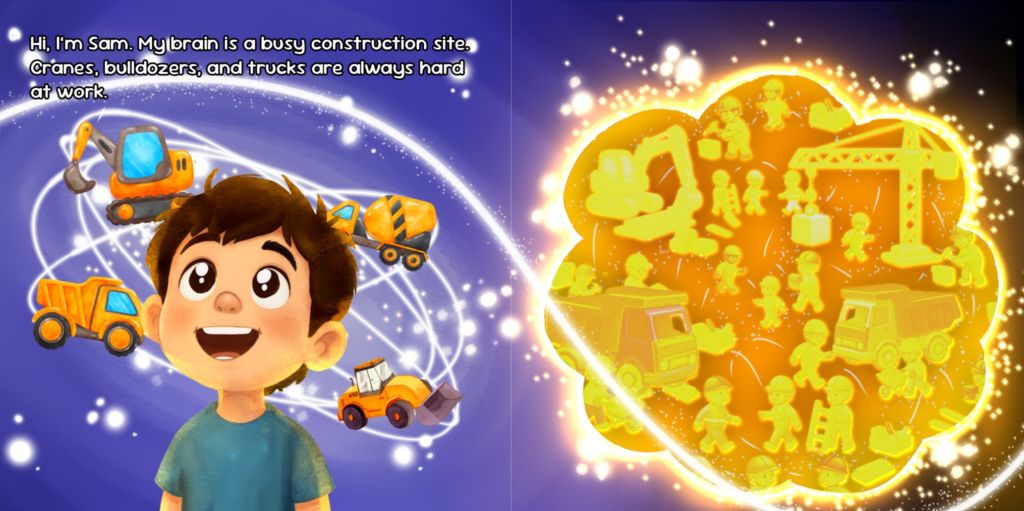
Instead of describing autism through complicated words, I imagined his mind as a busy construction site. While some brains follow paper blueprints, Sam’s Builder Brain is always building, planning, organizing, and creating. It’s busy, focused, imaginative, and sometimes a little overwhelmed too.
That simple metaphor became the heart of the story.
A different way to explain autism
Autism looks different in every person, and no single book could ever represent every child with autism. In the back matter, I explain that Sam’s story is just one example of what autism can look like.
Throughout the story, children are introduced to concepts like:
- special interests
- sensory sensitivities
- noise sensitivity
- earmuffs and other sensory supports
- routines and predictability
- stimming
- meltdowns
- different ways of thinking
But instead of presenting these as problems, I wanted to show them as natural parts of how Sam experiences the world, because that distinction mattered enormously to me.
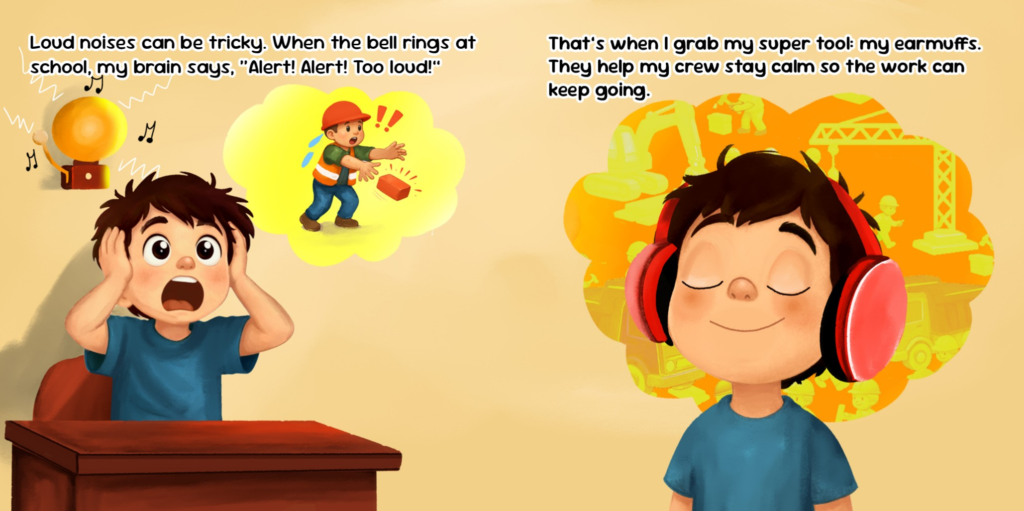
Throughout the story, children are introduced to concepts like sensory sensitivities and the tools many children use to help regulate their environment:
Children with autism don’t need to be “fixed.” They need to be understood, accepted, and celebrated for who they are. That belief guided every page I wrote and continues to guide everything I do for my son and in my career.
Why this story is personal
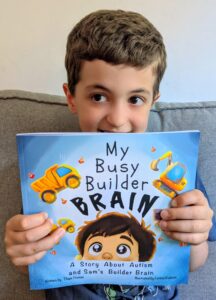 Although Sam is a fictional character, this story exists because of a very real little boy.
My son has taught me more about curiosity, joy, persistence, and unconditional love than anyone else ever could. He’s also taught me that many of the challenges children with autism face don’t come from autism itself, but from being misunderstood.
When someone understands why a child wears earmuffs, flaps their hands, needs extra time after a change in routine, or becomes overwhelmed by noise, it’s much easier to respond with patience and empathy. That’s exactly what I hoped this book could do.
Who is this book for?
My Busy Builder Brain was written for:
- children with autism who want to see themselves in a story
- siblings who want to understand their brother or sister better
- parents navigating a new autism diagnosis
- grandparents and extended family members
- kindergarten and elementary school classrooms
- teachers
- school libraries
- occupational therapists
- speech-language pathologists
- psychologists
- autism organizations
- anyone who wants to help children understand neurodiversity with kindness
Whether you’re reading it at bedtime, in a classroom, or before a conversation about autism, my hope is that it opens the door to understanding.
Why I chose a construction theme
Construction sites might seem like an unusual way to explain autism, but they made perfect sense to me.
My son has always been fascinated by construction vehicles, and I wanted to build the story around something he genuinely loved. The Builder Brain metaphor also helped me explain ideas like special interests, routines, sensory overload, and problem-solving in a way young children could easily understand.
The construction theme was the language my son already spoke, and it became the bridge that helped me explain autism through his eyes:
More than a children’s book about autism
At its heart, My Busy Builder Brain is about seeing the world through someone else’s eyes. Every child has strengths, faces challenges, and experiences the world a little differently.
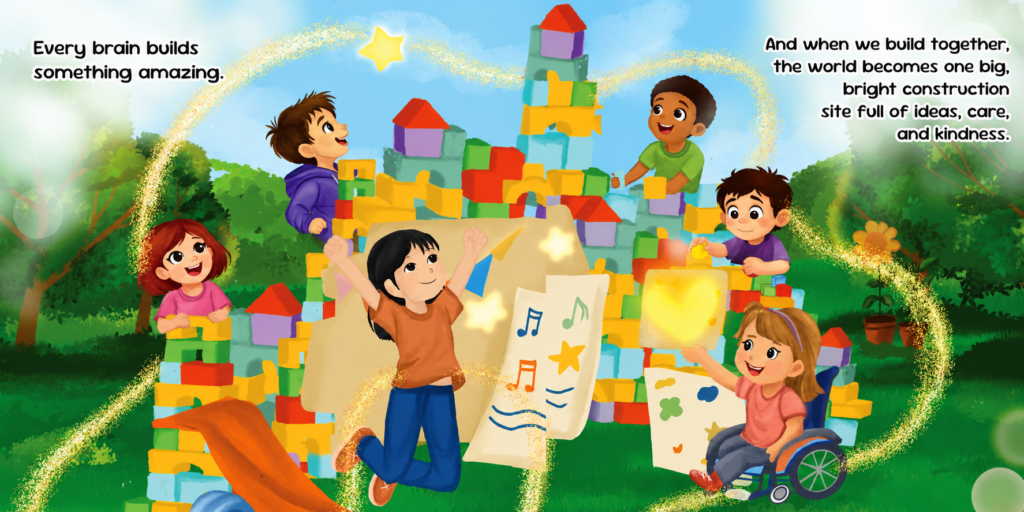
Some build stories, some build music, some build friendships. Some build incredible worlds inside their imagination. Sam’s brain builds construction sites.
Every one of those ways of thinking makes our world richer.
Frequently Asked Questions
What age is My Busy Builder Brain for?
The book is ideal for children roughly ages 3 to 8, although older children often enjoy it as a conversation starter about autism and neurodiversity.
Is this book only for children with autism?
Not at all. I wrote it with both neurodivergent and neurotypical children in mind. My goal was to help children understand one another and build empathy from an early age.
Is the story based on a real child?
Yes. The story was inspired by my oldest son, although Sam is a fictional character created to represent one child’s experience of autism.
Does this book represent every child with autism?
No. Autism is incredibly diverse, and every person with autism experiences the world differently. As I explain in the book, Sam’s story is just one example.
Thank you!
Writing My Busy Builder Brain has been one of the most meaningful projects of my life.
As both a mother and an autistic adult myself, this book represents something I wish had existed years ago: a gentle introduction to autism that celebrates differences instead of fearing them.
If this story helps even one child feel understood, one parent feel less alone, or one classroom become a little more accepting, then every late night spent writing it will have been worth it.
Because every brain builds something amazing, and the world is better when we build it together.
 Update, September 2026: The Ottawa Lookout published a beautiful feature about My Busy Builder Brain, Eli, our family, and the story behind the book. Read the full feature here.
My Busy Builder Brain is available now on Amazon and can also be ordered through bookstores and booksellers in Canada, the U.S., and internationally.
If you’ve already read it, I’d be incredibly grateful if you’d consider leaving an Amazon review. Reviews help more families, educators, and therapists discover the book and continue spreading understanding and acceptance.
Learn more about my work as a writer and communications professional.