I forget books almost as soon as I finish them, especially now that most of my reading happens on Kindle and the covers disappear the second I’m done. So this is my solution: a simple record of the books I read in 2025 and how they landed with me. The ones I loved, the ones that annoyed me, the ones that stayed, and the ones I wish I hadn’t bothered with.
How I pick my books and when I read them
First, the only time I have for “leisure reading,” meaning it isn’t work or learning related and I’m reading purely for fun, is in bed at night, after everyone is asleep and I finally have enough peace and quiet to read until I pass out. For that reason, I avoid anything that requires me to actually learn something, like books about communications or storytelling for work. That kind of reading makes me anxious, because I want to highlight things, connect them to other thoughts in my brain, write notes, and then suddenly I’m wide awake and miserable.
Second, Amazon’s algorithm also basically dictates what I read. About 80% of my leisure books come from Kindle Daily Deals and cost $2.99 or less. Trust me, you can find some real gems in that magical promo section, right alongside the steamy billionaire romances and religious self-help books for women. There are bestsellers that usually cost $25 or more, plus random, fun books your friends would never recommend simply because they’ve never heard of them. To me, it’s the digital equivalent of going into a second-hand bookstore and leaving with a bag full of interesting books for a total of five dollars, like I used to do with my dad when I was ten.
Because of the algorithm, the Kindle Daily Deals are also personalized for each user based on recent purchases, kind of like Netflix. For that reason, this year the algorithm seemed to decide that I really enjoy stories about mean women during World War II. And I bit. All of this is to justify the recurring themes on my list. Lol.
Anyway, let’s get to it. These are the books I read in 2025, in order, from January to December:
1. Disclosure – Michael Crichton
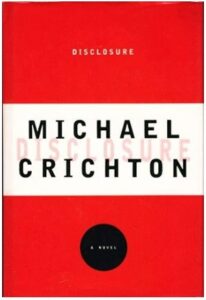 I bought this book because it’s by the same author as Jurassic Park, so it had to be good, right? The story follows a corporate executive accused of sexual harassment by his new boss, who happens to be a former girlfriend, and his fight to survive the accusation while navigating the power dynamics of a tech company in the 1990s.
The story itself was meh, but what I did like was how much the book feels like a time capsule from the 1990s, when the world was just discovering the internet, email, virtual reality, and all that. It’s written in a very “modern” way for its time and ends up being an amusing read that shows how dramatically everything has changed in less than 40 years.
2. The Angry Wife – Pearl S. Buck
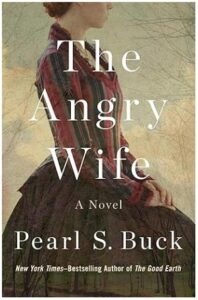 I saw the title of this book and thought “oh, a book about me!”, so I had to buy it. Haha. Turns out it’s not about a mother of three in the suburbs of Canada, but about a woman living in the American South right after the Civil War. From the outside, her life looks stable and respectable, but internally she’s worn down by the daily humiliations of being overlooked, taken for granted, and expected to keep everything running without complaint. This is a story about how anger can slowly harden inside a person when there’s no space to speak and no real partnership. It almost reads like the contrast between what you see on Instagram stories and real life today, except it’s a little older than that.
I really liked this book because I love stories set in the 18th and 19th centuries in the U.S., so I ended up buying several books by this author, who was awarded both the Pulitzer Prize and the Nobel Prize in Literature for her body of work. As it turns out, though, most of her famous work is actually set in China. Lol.
3. Razorblade Tears – S.A. Cosby
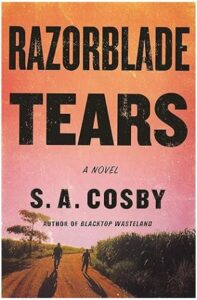 Razorblade Tears is the story of two fathers whose sons, who were married to each other, are murdered in a hate crime. The men didn’t like each other and neither accepted the fact that their sons were gay while they were alive. Both come from deeply homophobic backgrounds, and their relationships with their sons were distant and full of things left unsaid. They’re brought together by grief, guilt, and anger, and the story moves through the American South as they confront not only the violence that took their sons, but also their own beliefs, failures, and the weight of realizing too late what rejection can cost.
An okay book. Predictable, but still enjoyable. It’s a shame that the people who would most benefit from reading a story like this will probably never read it, though credit to the author for putting it out into the world.
4. The Mine – Antti Tuomainen
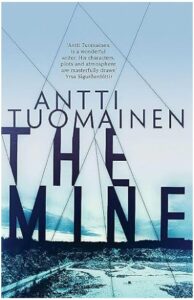 If Goodreads hadn’t sent me a wrap-up email with this book on the list of what I read in 2025, I would never remember it ever crossed my path. After thinking about it for a bit and rereading the summary on the Kindle store, I remembered it’s about an investigative journalist in Finland who uncovers environmental crimes linked to a mining company, while something nonsense happens in his personal life.
I remember thinking it was okay while I was reading it, enough to make you want to know how it ends even though you’ve already guessed halfway through. Then you close the book and forget it forever. I honestly don’t understand why the reviews for this one are so glowing, I even saw the word “mesmerizing” used somewhere. Do not believe that.
5. A Prayer for the Dying – Stewart O’Nan
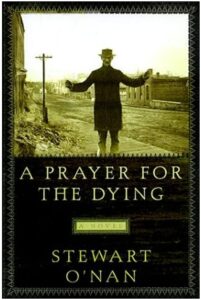 This story follows the sheriff and undertaker of a small town in Wisconsin in the late 19th century during a deadly diphtheria outbreak. As the disease spreads, he’s responsible for enforcing quarantines, carrying out executions ordered by the state, and handling the bodies of neighbors and friends, all while trying to protect his own family.
I almost didn’t read this book because it’s written in the second person (“you woke up, you kissed your wife”). I’d never read a book like that before, and it annoyed me at first. But I’m so glad I stuck with it, because after just two pages I was hooked, and this book impacted me. I’m one of those people who only gets emotional if a dog dies, but I bawled at the end. It was so good, I’m traumatized for life. Like, it psychologically scarred me to the point where I had to wake my husband up to vent about the ending because I was so shaken. I don’t know why he keeps saying I should read lighter stuff at night. Go figure. 100% recommend.
6. The Return – Michael Gruber
 Do you like white saviour stories? If you do, then read this total nonsense about “a cultured man whose public persona hides a violent past.” After receiving a brain aneurysm diagnosis, he travels to his late wife’s hometown in Mexico to end cartel violence on his own, with the help of his old Vietnam War veteran friend. Yes, because ending cartel violence is that simple.
I bought this book because I liked the skull on the cover and it was $0.99, and I finished it because it was so ridiculous I had to see how it would end. Guess what, the ending was ridiculous too. Very consistent. This book is proof that self-criticism is a writer’s worst enemy. If this guy had any, he wouldn’t have written a book like this that somehow became a New York Times bestseller.
7. Deadwood – Pete Dexter
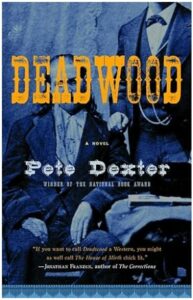 If I could read books about just one topic for the rest of my life, I’d die happily reading stories about the Old Wild West. I’m obsessed with westerns and with how insanely hard and brutal life was back then, and thanks to the algorithm picking up on that, it led me to this book, Deadwood, which will forever be on my list of the top ten books I’ve ever read. No exaggeration. I was genuinely sad when I finished it, it’s just that good. I fully plan to reread it every few years, because it’s just so much fun.
The novel is set in the real town of Deadwood, in the Black Hills of South Dakota, during the gold rush of the 1870s. It features real historical figures like Wild Bill Hickok, Charlie Utter, and my all-time favorite, Calamity Jane, which will absolutely be the name of my next dog, by the way, alongside gunmen, gamblers, prostitutes, and other badass characters doing their best to survive in a chaotic town with no rules, where the only real law is violence. Pete Dexter is an incredibly talented writer, and his subtle sense of humor made me laugh more than once while reading. The only complaint I have about this book is that I read it too fast.
8. The Indifferent Stars Above: The Harrowing Saga of the Donner Party – Daniel James Brown
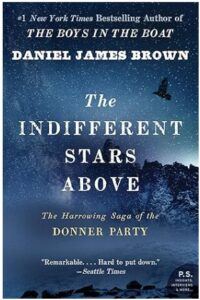 Thank you, algorithm, for leading me to all these amazing Old Wild West books, because it also led me to this one. This is a nonfiction narrative about a girl and her family who left their farm in Illinois in 1846 in search of a better life in California, and whose luck was bad enough to place them among the infamous Donner Party. The book follows the group of emigrants who became stranded in the Sierra Nevada mountains during winter and endured unthinkable horrors so that a few could survive, including resorting to cannibalism.
It’s a fascinating story that gives deep insight into a brutal chapter of American history that we often hear referenced in passing, sometimes even joked about, but rarely understand in full. Not for the faint of heart, but an incredibly powerful read. I honestly place it on the same level as The Grapes of Wrath, which I’ve read five times since I was eleven because it’s just that good, and because every reread reveals new details and layers you somehow missed before.
9. Buddy Boys: When Good Guys Turn Bad – Mike McAlary
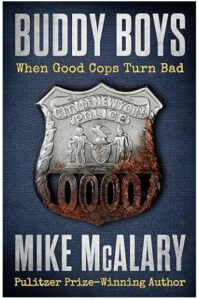 A nonfiction book about corruption within the New York City Police Department that took place in the 1980s around the 30th Precinct in Harlem. The author looks closely at how power, peer pressure, and institutional protection can erode accountability, and how violence and wrongdoing aren’t usually the result of obvious villains, but of systems that reward silence and punish those who speak up.
There was something about this book that I really disliked. I’m not sure if it was the fact that the dirty cops called each other “buddy boys,” or just the author’s style in general. Still, considering I only paid $1.99 for it, it was an amusing enough read.
10. A People History of the Vampire Uprising – Raymond A. Villareal
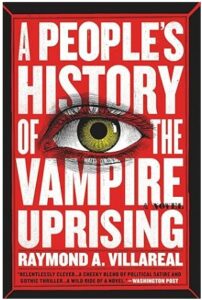 I asked ChatGPT to describe this book in three sentences, and it came up with this: “The book tells the story of a global vampire outbreak through interviews, reports, and documents, piecing together how a mysterious illness slowly reshapes society. What begins as a public health crisis turns into a political and moral one, exposing fear, prejudice, misinformation, and the ways power reacts to a new group being labeled as dangerous and less human. It’s less about vampires as monsters and more about how quickly societies unravel when panic sets in and empathy disappears.”
Sounds so cool, doesn’t it? Well, this book is so freaking boring and annoying that I get angry just remembering I even attempted to read this piece of crap, and I’m genuinely disappointed because it could’ve been really good. According to Kindle, I stopped reading at 63%, but I consider it done because that’s about as stoic as I can be. I’m not one of those people who insists on finishing bad books. I’m not a masochist.
11. On Hitler’s Mountain – Irmgard A. Hunt
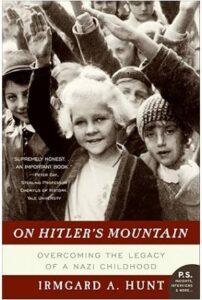 On Hitler’s Mountain is a memoir by a woman who grew up in Germany during the rise and fall of Nazism, literally living on the mountain where Hitler’s Eagle’s Nest was located. What’s striking is that despite that proximity to power, she had basically no understanding of what was actually happening. Her family suffered deeply too. Her father was sent to fight in the war and never returned, and daily life was marked by loss, hunger, and constant insecurity. Ordinary Germans, especially in rural areas, were poor and focused on day-to-day survival, largely cut off from the broader reality of the regime.
The book helps explain how that level of ignorance was possible. Information was tightly controlled, access to outside perspectives was limited, and most people relied entirely on what they were told. The result was a distorted sense of normal life, where people went to school, worked, worried about food, followed rules, and tried to get through their days while bombings and shortages became routine. It’s a quick and solid read, and a sobering reminder of how powerful control and isolation can be in a world without access to outside information.
12. Mistress of Life and Death – Susan J. Eischeid
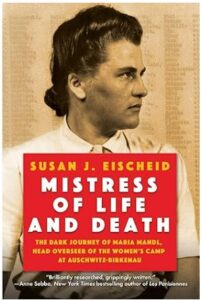 After reading the German girl’s memoir, the algorithm quickly picked up on my World War II streak and pushed me toward this biography of Maria Mandl, the SS guard who became the chief of the women’s camp at Auschwitz. The book describes her role in turning that place into an indescribable hell for so many people, and how she rose to power from a “nice girl” from a loved and respected family in a small village in Austria to a completely unhinged sadist who seemed to take real, almost sexual pleasure in torturing others and deciding their deaths in a place that feels almost too monstrous to be real.
This was another book I had to stop several times just to force-share details with my poor husband, because what she did was too horrific to keep to myself. It’s a heavy, disturbing read that made me wish I liked steamy billionaire romances instead, but it also feels important given everything that’s going on in the world right now. What really stuck with me is the idea that she was, at one point, just a normal person looking for a job, couldn’t find one, got her first position as a guard at another concentration camp, and then slowly degenerated into this monster who was eventually hanged. Is there a monster we all carry somewhere inside? Terrifying to think about. After her family learned what she had become, her mother attended Mass every single day to pray for forgiveness for her daughter’s sins, and her father refused to ever talk about her. Every parent’s worst nightmare.
13. Older Brother – Mahir Guven
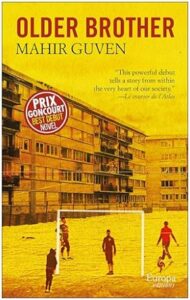 Older Brother is a novel told in alternating voices, following two brothers growing up in Paris in a working-class Arab immigrant family. One is trying to live an ordinary life as an Uber driver, while the other brother becomes increasingly drawn toward religious radicalization and ends up going to Syria. The book offers a look into modern-day France and, instead of explaining radicalization or making political arguments, stays close to the brothers themselves, how lonely they both are in different ways, how badly they misunderstand each other, and how their distance grows slowly until one day it’s no longer fixable.
It’s an interesting story that builds up and really pulls you along because you want to know where it’s going… but then… it has the laziest, dumbest, most underwhelming ending a book could possibly have, and it genuinely makes me mad to remember I traded precious hours of sleep to read it. Don’t waste your time. Ugh. I’m mad all over again.
14. Dopamine Nation – Anna Lembke
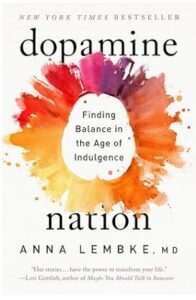 Dopamine Nation is about how everything in modern life is designed to make us feel good immediately, and how that constant chasing of pleasure is actually making us anxious, numb, and exhausted. The author, a psychiatrist, uses patient stories and everyday examples to explain how phones, social media, sugar, porn, shopping, drugs, basically anything that gives quick relief, mess with our brains and our ability to feel okay without stimulation. The core idea is uncomfortable but clear: if we never allow ourselves to sit with boredom, discomfort, or pain, we lose our emotional balance, so we need to learn to intentionally avoid constant pleasure to reset our internal system.
This one almost didn’t make the cut for leisure reading for two reasons. First, it made me feel awful about myself and about the future the entire time, which is not a great feeling right before bed. Second, I kept wanting to take notes and make lists of things to write about for work, which is also not relaxing at all. Worth reading anyway if you have kids and care about where this crazy world we’re living in seems to be heading.
And that’s a wrap!
Looking back, considering how tired and busy I was this year, I’m actually pretty satisfied with the number of books I managed to read. That said, there are definitely a few on this list I wish I could unread and trade back for the hours they took from me, but that’s part of the deal. My book resolution for the new year is to read more leisure books that also teach me something, without turning my brain fully into work mode. I’m currently reading one about how to make regret work in our favor, which will probably show up on next year’s list, so stay tuned.
For 2026, I plan to spend more time working on my own books, especially my children’s books and the mix of memoir and guide I’m writing for other parents of kids with autism. Let’s see where all this leads.
Happy 2026, everybody, and best of luck in the new year!